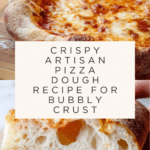
Crispy and Chewy Artisan Pizza Dough with Bubbly Crust Recipe

This artisan pizza dough recipe yields a crispy, chewy, and bubbly crust that’s perfect for homemade pizzas. Using a slow fermentation and a combination of folds to develop gluten, this dough provides an ideal texture and crust flavor that holds up well to various toppings and high-temperature baking on a pizza stone, steel, or cast iron pan.
- Prep Time: 10 minutes
- Cook Time: 10 to 25 minutes (depending on baking method)
- Total Time: 6 hours 20 minutes (including resting and rising times)
- Yield: 2 medium pizzas (about 12-inch each) 1x
- Category: Bread / Pizza Dough
- Method: Baking
- Cuisine: Italian
Ingredients
Scale
Dough Ingredients
- 500g (3 3/4 cups plus 2 tbsp) all-purpose flour
- 375g (1 1/2 cups water plus 2 tbsp) warm water, divided
- 1g (1/4 tsp) active dry yeast
- 10g (1 1/2 tsp) fine salt
Instructions
- Initial Mixing and Rest: Mix the flour with all but 1 tablespoon of the warm water in a large bowl until just combined. Cover the bowl and let the mixture rest for 20 minutes to hydrate the flour. Meanwhile, sprinkle the yeast over the remaining tablespoon of warm water and allow it to dissolve.
- Incorporate Yeast and Salt: Sprinkle salt evenly over the dough surface. Stir the yeast mixture briefly and pour it over the dough. Using a wet hand, reach under the dough and stretch a section up and fold it over the top repeatedly until the dough is covered. Pinch off 5–6 small chunks of the dough, fold each chunk over itself several times to combine the ingredients into a shaggy dough. Cover and let rest for about an hour.
- Gluten Development: With a wet hand, fold the dough by reaching underneath, stretching a section upwards, and folding it over the center. Rotate the bowl and repeat the fold 4–5 more times until the dough tightens into a ball. Invert the dough ball into a lightly greased clean bowl with the seam side down and the top smooth. Cover and allow it to rise until doubled in volume, approximately 5 to 6 hours.
- Divide and Shape Dough Balls: Turn the dough out onto a floured surface and cut in half. For each piece, stretch out one quarter until resistance is felt and fold back over the center, then repeat for the remaining edges to form a loose ball. Flip the ball seam side down, cup your hands around it, and gently drag it towards you while rotating to create tension and smooth the surface into a tight, round ball.
- Second Rest and Preheat Oven: Place the shaped dough balls on a greased plate, lightly oil the tops, cover, and let them rest at room temperature for about an hour. Preheat the oven during this time. If not baking immediately, cover tightly and refrigerate for up to 2 days.
- Prepare Baking Surface: Place a pizza steel, stone, or an inverted baking sheet on the middle oven rack and preheat the oven to 500°F (or as high as it goes). Allow the oven to heat for at least 45 minutes. Prepare a pizza peel by generously flouring it, or alternatively, lightly grease a cast iron pan with olive oil.
- Shape the Pizza Base: On a floured surface, flatten one dough ball into a large disk keeping a thick 1-inch lip around the edge. Hold the thick edge and gently stretch the dough by gravity to form a 12-inch circle. Transfer to the floured pizza peel and adjust the shape as necessary, ensuring it does not stick. Or shape to fit your cast iron pan and place inside.
- Add Sauce and Toppings: Spread sauce and toppings evenly over the dough leaving the 1-inch perimeter clear.
- Bake the Pizza: Slide the pizza onto the preheated steel or stone and bake for 5 minutes. Then switch to broil and broil for 2 to 4 minutes until the cheese melts and the crust is golden and blistered. If using a cast iron pan, bake for 15–20 minutes and broil for the last few minutes to achieve spots of char. Repeat with the remaining dough and toppings.
Notes
- Using warm water helps activate the yeast but ensure it’s not too hot to avoid killing the yeast.
- Resting and folding the dough multiple times develops gluten, leading to a chewy texture.
- Long fermentation (up to 6 hours) contributes to better dough flavor and texture.
- Preheating the baking surface thoroughly is critical for a crispy crust.
- If not cooking the dough immediately, store it in the refrigerator for up to 2 days, tightly wrapped.
- Flouring the pizza peel prevents the dough from sticking when transferring to the oven.
- Adjust baking and broiling times according to your oven for best results.
Keywords: artisan pizza dough, crispy pizza crust, chewy pizza crust, bubbly pizza crust, homemade pizza dough, pizza stone baking, no-knead pizza dough